
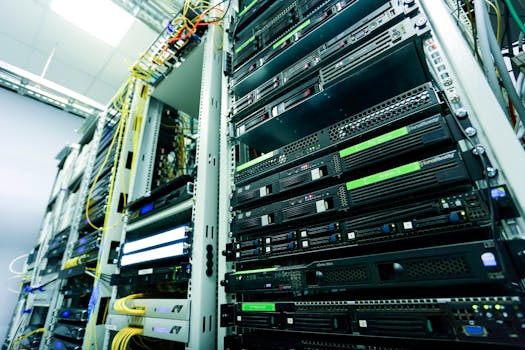
The $5 billion annual compute lease agreement between xAI and Anthropic for the 'Colossus 1' supercomputer is more than a commercial transaction—it is a foundational pivot. By securing a multi-year, high-margin revenue stream, xAI is transitioning from a speculative AI research laboratory into an industrial-scale infrastructure utility. This shift mirrors the 'compute-backed' narrative that has catalyzed valuation premiums for companies like Cerebras, providing xAI with a predictable financial bedrock essential for a successful IPO.
The Utility Pivot
The lease agreement, which reportedly grants Anthropic access to over 220,000 NVIDIA accelerators, positions xAI as a 'sovereign compute' provider. Unlike traditional model developers reliant on external cloud providers, xAI—now merged with SpaceX’s infrastructure arm—possesses the physical supercomputing capacity that has become the industry’s most critical bottleneck. For IPO investors, this changes the valuation calculus. Rather than purely weighting the uncertain efficacy of frontier models, the market can now anchor xAI’s valuation to a concrete infrastructure-as-a-service model, comparable to high-growth data center operators.
Quantifying the 'Key-Man' Discount
The central challenge for this IPO narrative is the profound governance and concentration risk. Because xAI and the supercomputer infrastructure are controlled by Elon Musk, the market must reconcile the utility-like predictability of the Anthropic contract with the volatility of Musk’s centralized control.
Investors typically apply a 'key-man' and related-party discount—estimated between 10% and 30%—to account for the risk that supply continuity could be disrupted by non-arm's-length decisions or unilateral contract amendments. However, this risk is a double-edged sword. If xAI utilizes its upcoming S-1 filing to formalize objective contractual protections—such as independent board oversight of the lease and strictly defined, non-discretionary termination clauses—the 'sovereign' nature of the compute infrastructure could actually mitigate the discount. A truly 'bankable' contract, secured by transparent governance, transforms the asset from a idiosyncratic risk into a unique strategic advantage that competitors cannot easily replicate.
Counter-Argument and IPO Viability
Skeptics argue that a single, multi-year lease does not resolve the structural volatility of an AI business. The extreme customer concentration—where Anthropic potentially accounts for nearly 100% of revenue—remains a major red flag that could invite a further 10–40% valuation haircut. If the market views this as a liquidity-driven one-off rather than a durable utility annuity, the IPO premium will evaporate.
Ultimately, the viability of xAI’s IPO will hinge on its ability to demonstrate that the $5 billion annual revenue is the baseline for an infrastructure utility, not the ceiling. The valuation path forward requires xAI to prove that it can scale this model beyond a single counterparty, utilizing the stability of the Colossus 1 contract to de-risk its path to the public markets.