
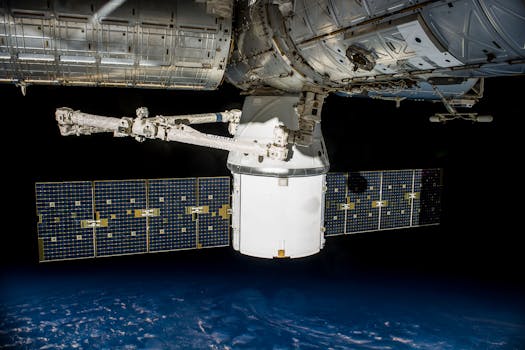
The Orbital Compute Pivot: Why SpaceX’s IPO Narrative Just Decoupled from Aerospace
The market’s long-standing expectation for a SpaceX IPO has traditionally been tethered to the company's launch manifest and Starlink's terrestrial connectivity business. That narrative is now fundamentally obsolete. As of May 2026, SpaceX is positioning itself not merely as a launch provider, but as the foundational infrastructure utility for "sovereign orbital compute," a shift that bypasses the land, power, and regulatory constraints currently crippling terrestrial data center expansion.
The Orbital Infrastructure Pivot
The evidence for this pivot is now structural, not speculative. On January 30, 2026, SpaceX filed an application with the FCC (ICFS File No. SAT-LOA-20260108-00016) for a "SpaceX Orbital Data Center system," authorizing up to one million satellites. This move from connectivity to computation is being validated by the industry's most significant players. In May 2026, Anthropic signed a major terrestrial compute deal with SpaceX while explicitly formalizing its interest in future orbital capacity. Simultaneously, reports indicate Google is in active discussions with SpaceX regarding its own "Project Suncatcher" initiative—an effort to deploy TPU-equipped orbital satellites as early as 2027.
This infrastructure pivot is driven by the desire for "sovereign compute." Terrestrial hyperscalers like AWS, Azure, and Google Cloud face increasingly acute bottlenecks: grid power scarcity, local zoning resistance, and environmental regulatory hurdles. Orbital platforms, by contrast, harness near-continuous solar flux (approx. 1361 W/m²) and operate outside the purview of local terrestrial authorities.
The Engineering Reality Check
While the strategic logic is sound, the technical hurdles are formidable. Unlike ground-based facilities that utilize convective cooling, orbital assets must rely on thermal radiation in a vacuum. A 100 kW compute payload would require a radiator surface area of approximately 130–250 square meters, creating a significant mass penalty that pushes launch costs upward. Furthermore, commercial AI accelerators (GPUs/TPUs) are susceptible to radiation-induced errors; hardening this hardware—or accepting a "disposable" model of short-lived, replaceable satellite constellations—will dictate the long-term unit economics.
The entire architecture hinges on Starship achieving sub-$300/kg launch costs. If launch costs remain above this threshold, the "disposable infrastructure" model becomes economically non-viable.
Sovereignty and Regulatory Limits
Investors should be wary of the "lawless high frontier" narrative. As our research underscores, orbital assets remain firmly under the jurisdiction of their registering state. Under the Outer Space Treaty, SpaceX's satellites are legally part of U.S. territory, remaining subject to ITAR/EAR export controls and the U.S. CLOUD Act. Orbital sovereignty provides supply chain diversification and physical security—not regulatory immunity.