Over the course of roughly twenty-four hours between Wednesday, May 21, and Thursday, May 22, 2026, the Trump administration suffered two significant setbacks: the collapse of a flagship budget reconciliation package in the Senate and the resignation of Director of National Intelligence Tulsi Gabbard.
Markets and media coverage have largely collapsed these events into a unified narrative of "administrative instability." This conflation is structurally misleading. While both events are consequential, they arise from fundamentally different mechanisms—one a failure of legislative mechanics, the other a human exigency.
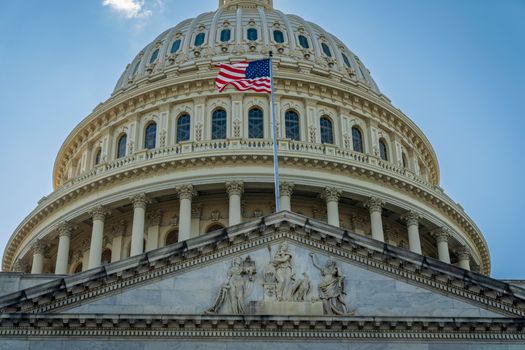
The collapse of the budget reconciliation bill on May 21 was not a tactical failure or a procedural misfire; it was a structural deadlock. Senate Majority Leader John Thune had intended to pass a package funding Immigration and Customs Enforcement and Border Patrol through 2029, a project aimed at meeting President Trump's June 1 deadline. However, the legislation was derailed when the administration attempted to load the reconciliation vehicle—a process designed for fiscal policy—with a $1.8 billion "anti-weaponization" fund intended to compensate individuals for past investigations.
The resulting Republican revolt, led by Senators Bill Cassidy and Katie Britt, was predictable. The reconciliation process relies on the discipline of its narrow, fiscal focus. When the executive branch attempts to use that narrow-majority mechanism for non-budgetary priorities, the structural integrity of the process fails. The briefing by acting Attorney General Todd Blanche failed because the issue was not a misunderstanding of the fund's scope, but a disagreement with the administration's decision to treat a fiscal vehicle as a vessel for unrelated political aims.
By contrast, the resignation of DNI Tulsi Gabbard on May 22 is fundamentally idiosyncratic. Gabbard’s stated reason—her husband’s diagnosis with a rare form of bone cancer—is personal. While her fifteen-month tenure was marked by internal tensions over Iran policy, documented by the March 2026 resignation of her aide Joe Kent, the immediate cause of her departure is a family crisis, not a policy purge.
The market response—price swings in cabinet-departure indices and renewed volatility in prediction markets—treats these events as part of a single, deteriorating administrative trajectory. But conflating a structural legislative impasse with a human-driven cabinet departure obscures the underlying reality. The reconciliation deadlock reveals a persistent friction between executive political ambition and legislative procedural constraints. Gabbard’s departure reveals only the vulnerability of cabinet stability to external, personal circumstances.
Parsing these events is essential for assessing the administration’s durability. The legislative failure indicates that the White House remains constrained by the procedural realities of the Senate conference, regardless of the president's goals. The DNI vacancy, while notable, is a staffing contingency. Analysts and investors would be better served by focusing on the former, which suggests a structural limit on the administration’s legislative capacity that will persist through the upcoming June session.