The Dual Catalyst: How the OpenAI Court Victory and SpaceX IPO Rhetoric Reset the AI IPO Timeline
The convergence of OpenAI’s courtroom victory and Elon Musk’s renewed rhetoric on a SpaceX IPO marks the transition from speculative AI-sector posturing to a high-velocity IPO cycle. These events are not merely corporate milestones; they serve as the clearing mechanism for the legal and capital-market bottlenecks that have constrained the sector's most significant players.
Governance Stabilization: The Musk Verdict
On May 18, 2026, a federal jury dismissed Elon Musk’s $150 billion lawsuit against OpenAI. While not an exoneration of the company’s data-usage practices or an end to its copyright exposure, the verdict functionally eliminates the existential "governance overhang" that had clouded OpenAI’s path to public markets. By resolving claims regarding corporate misconduct and mission deviation, the trial’s conclusion stabilizes OpenAI’s leadership—particularly CEO Sam Altman—and provides the corporate-governance clarity institutional investors demand prior to an S-1 filing.
Crucially, this stabilization transforms OpenAI from a litigation-burdened entity into a viable anchor tenant for the "industrial-compute sovereign" model. As national strategies for AI autonomy gain momentum, these projects require billion-dollar, multi-year commitments from foundation model providers; a litigious, unstable OpenAI was a non-starter for such commitments. With the litigation behind it, OpenAI’s credit profile and partnership stability have been materially de-risked.
Capital Market Precedent: The SpaceX IPO
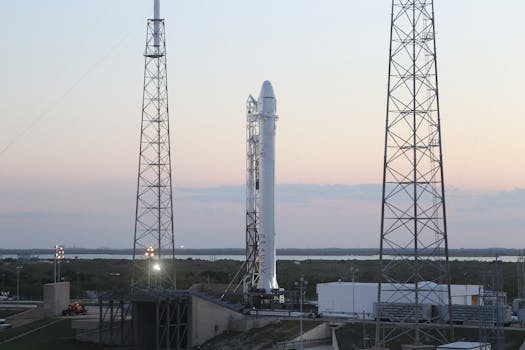
Simultaneously, Elon Musk’s public signaling—reinforced by reporting that a SpaceX SEC prospectus could be imminent—provides the necessary "capital market precedent." The market for mission-scale, infrastructure-heavy technology has historically been fractured. SpaceX’s trajectory, culminating in a valuation potentially exceeding $1.75 trillion, demonstrates that public markets are primed for long-horizon, capital-intensive infrastructure plays.
The SpaceX IPO is expected to act as a liquidity catalyst for the broader sector. The sheer volume of institutional capital seeking exposure to SpaceX will likely trigger a re-rating of related "industrial-compute" assets. If SpaceX can successfully navigate a massive public-market debut, the hurdle for OpenAI or other high-cap AI labs to articulate their own capital-intensive roadmap becomes significantly lower.
The Counter-Argument: Residual Risk
Investors must distinguish between corporate governance risks and technical/data risks. While the Musk trial success clears the governance path, OpenAI remains embroiled in a multidistrict copyright litigation (MDL) in the Southern District of New York. This is a fundamental risk to the "industrial-compute" model, which relies on the ability to train frontier models on vast, copyrighted datasets. A legal win in a corporate governance dispute does not immunize the company against fair-use rulings in the copyright MDL. Similarly, Musk’s "pretty soon" rhetoric is a hallmark of his communications strategy; a 'buy the rumor, sell the news' dynamic remains a distinct possibility if the S-1 filing does not match the intensity of the current market hype.