The dismissal of Elon Musk’s lawsuit against OpenAI on May 19, 2026, functions as the critical de-risking catalyst for the company's expected September 2026 initial public offering. By clearing the primary legal overhang—which had threatened extraordinary remedies including structural dismantling—the ruling allows OpenAI to transition from a governance-crisis bottleneck to a high-velocity race for institutional capital.
The Legal Cleansing
The California District Court’s decision to dismiss the litigation on procedural grounds—specifically that Musk waited too long to file—effectively sidelines the existential threat to OpenAI’s corporate structure. While an appeal to the Ninth Circuit remains a residual risk, the trial court's dismissal allows the company to move forward with a clean slate for its S-1 registration. This is not just a tactical victory; it is the necessary condition for underwriters like Goldman Sachs and Morgan Stanley to finalize the prospectus with a clear narrative, free from the immediate prospect of massive disgorgement or executive reshuffling.
The Industrial-Compute Sovereign
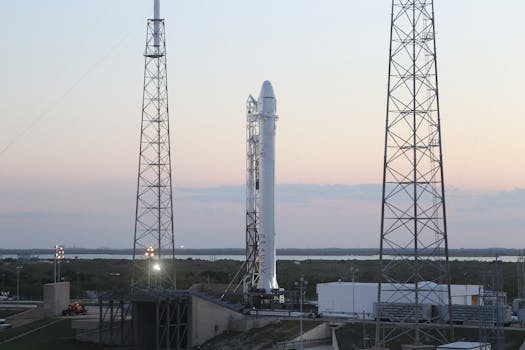
OpenAI is actively positioning itself as an "industrial-compute sovereign"—an entity that aims to own the entire AI infrastructure stack, from massive data centers and power generation to preferential hardware access. This model contrasts sharply with SpaceX, which achieved sovereign status through total vertical integration of physical manufacturing.
OpenAI’s path—epitomized by the $500 billion "Stargate Project"—is partnership-heavy, relying on alliances with Microsoft, NVIDIA, and others to bridge its infrastructure gaps. While this strategy offers a faster route to scale than direct, in-house chip fabrication, it introduces a reliance on Microsoft’s Azure ecosystem that represents a significant governance trade-off. OpenAI’s IPO will test whether public markets value this partnership-centric sovereignty as highly as the physical, vertically integrated independence that defines SpaceX.
IPO Mechanics and Governance
The upcoming S-1 will confront the complexity of OpenAI's nonprofit control structure. Following the October 2025 recapitalization, the OpenAI Foundation maintains the power to appoint and replace the board of directors, rendering the company a 'controlled entity' even if it launches with a single-class share structure. Institutional investors will be buying economic interest without governance influence, a structure that requires significant disclosure clarity regarding the Foundation’s long-term objectives and potential for future equity dilution through the Foundation's 15-year warrant.
What to Watch
The success of the September IPO hinges on three variables:
- Anchor Commitments: Whether OpenAI can secure substantial capital from anchor investors who can absorb the massive liquidity demand of a potential $1 trillion valuation.