
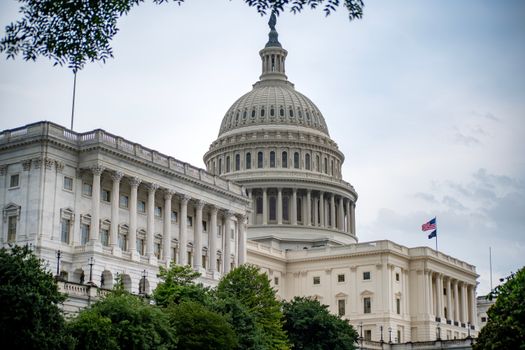
The Digital Asset Market Clarity Act (CLARITY Act) has spent months in legislative purgatory. Following a bipartisan breakthrough on stablecoin yield language—negotiated by Senators Thom Tillis (R-N.C.) and Angela Alsobrooks (D-Md.)—the market priced in an impending markup as a near-certainty. This assumption was flawed. The bill is not being delayed by mere procedural inertia; it is trapped in a multi-front political deadlock that threatens its immediate viability.
The market’s focus on the yield compromise ignored two structural realities that have coalesced into a terminal procedural trap.
First, the banking sector has organized a sophisticated, policy-driven obstructionist campaign. On May 4, 2026, a coalition of trade groups—including the American Bankers Association, the Bank Policy Institute, and the Independent Community Bankers of America—publicly rejected the Tillis-Alsobrooks compromise. Their argument is technical but potent: Section 404 of the draft, as written, contains an "evasion" loophole that would allow crypto intermediaries to pay "yield" disguised as membership rewards. By framing this as a risk of $1.5 trillion in deposit flight from traditional community banks, they have successfully pivoted the conversation from "regulatory clarity" to "financial stability." This is not routine lobbying; it is a coordinated effort to force the committee to adopt stricter, explicit prohibitions that would effectively neuter the bill's appeal to crypto issuers.
Second, the political math of the Senate Banking Committee has turned against Chairman Tim Scott. Scott has made it clear that a bipartisan markup requires unanimous Republican support. Senator John Kennedy (R-La.), a pivotal swing vote, is now withholding his support. His objection is entirely unrelated to crypto: he is using his vote as leverage to force movement on the 21st Century ROAD to Housing / Build Now Act. Kennedy's frustration, expressed publicly as "pissed off-ed-ness" in media reports, has turned his vote into a positional bargaining chip that Chairman Scott cannot resolve through crypto-specific concessions.
The intersection of these two pressures creates a high-stakes bottleneck. The housing-related friction acts as a multiplier to the banking sector’s obstructionism: Chairman Scott cannot risk bringing a bill to a markup that is already being attacked by the banking lobby if he cannot first guarantee the unity of his own Republican caucus.
The market assumption that the yield breakthrough was the "final hurdle" is outdated. We have moved from a negotiation over substance to a game of political hostage-taking. Ripple CEO Brad Garlinghouse’s recent warning at Consensus—that the window for passage will "drop precipitously" if the markup slips—is a sober acknowledgement of this reality. If the committee fails to resolve the banking groups' technical demands and Kennedy's housing grievance in the next two weeks, the CLARITY Act will likely be shelved as election-year rhetoric takes over. Investors should treat the current stagnation not as a delay, but as a structural reassessment of the bill's path to enactment.