The Cerebras Valuation Catalyst: Why SpaceX’s IPO Narrative Just Received its Final Green Light
The successful May 14, 2026, IPO of Cerebras Systems—which saw the chip designer’s shares open at $350, valuing the company at over $100 billion—is not just another liquidity event in the AI sector. It is the crucial valuation catalyst that provides institutional markets with the missing benchmark to re-rate Elon Musk’s SpaceXAI into a critical infrastructure-utility play.
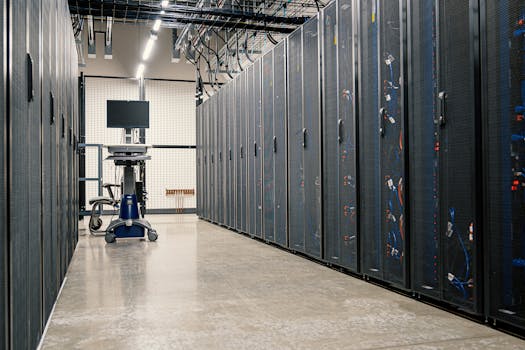
For months, the market has struggled to price the combined infrastructure assets of SpaceX and xAI. The conventional aerospace-speculation model, tethered to launch manifests and Starlink terrestrial connectivity, fundamentally failed to account for the pivot toward what can be termed "sovereign compute." That pivot is now undeniable. The centerpiece of this strategy is "Colossus 1," the Memphis-based supercomputer cluster featuring 220,000 NVIDIA GPUs and 300+ MW of power.
The recent, exclusive four-year lease of the entire Colossus 1 cluster to Anthropic—valued at approximately $5 billion annually—transforms this massive capital asset into a predictable, high-volume revenue engine. This lease does more than bolster xAI’s commercialization; it signals that SpaceXAI is positioning itself as a sovereign infrastructure utility. The model here is simple: control the physical stack—the power, the logistics, the fabrication—to provide independent, scalable compute to frontier-model developers. This is exactly the value proposition currently being rewarded in the public markets, and Cerebras’s debut provides the necessary proof.
By leveraging the Cerebras IPO as a comparable, SpaceXAI can credibly shift its valuation from speculative aerospace to industrial-compute sovereign. The math is stark: with estimated annual EBITDA for the compute-leasing segment reaching ~$4.37 billion, applying standard infrastructure-utility multiples (7x–12x EBITDA) suggests an enterprise value range of $28 billion to $54 billion for this segment alone. This is not aerospace; it is utility-scale infrastructure.
However, institutional skepticism remains high. The counter-argument to this narrative is that the sector may be overheating. Skeptics point to the regulatory gridlock surrounding power interconnection—particularly within ERCOT—and the significant customer concentration risk inherent in a deal where a direct competitor (Anthropic) leases a core company asset. Governance concerns, especially regarding potential conflicts of interest in how xAI might reallocate its own infrastructure, remain a significant hurdle for traditional institutional investors.
For the SpaceX IPO narrative, the green light has been given, but the path is narrow. The "Sovereign Compute" thesis depends on rapid, repeatable build-outs like the Memphis site, which was reportedly executed in just 122 days. If SpaceXAI can demonstrate that its "Terafab" projects in Texas can achieve similar speed, while maintaining independent data-isolation safeguards, the "infrastructure-utility" story will become the primary engine for its IPO.