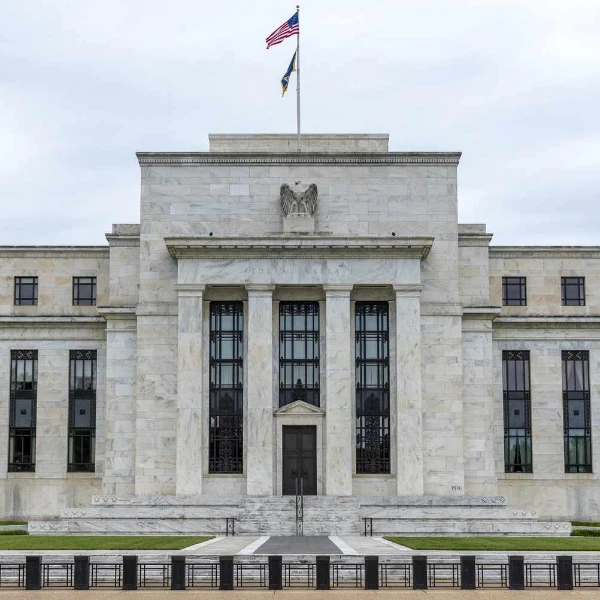
The Federal Reserve is at a structural inflection point. With Kevin Warsh’s confirmation as Chair on May 13, 2026, the central bank’s policy stance is shifting. Markets are currently mispricing this transition, reading Warsh’s 'dovish' history while ignoring his stated imperative: establishing hawkish credibility to counteract administration pressure for rate relief.
The Credibility Constraint
Warsh’s confirmation hearing on April 21, 2026, set a clear mandate. His 'inflation is a choice' thesis is not rhetoric; it is a structural commitment. During his testimony, he explicitly linked inflation persistence to the central bank's own balance sheet, proposing a 'regime change' that minimizes the routine use of quantitative easing and prescriptive forward guidance.
The market is reacting to this pivot with preemptive yield tightening. Between May 11 and May 15, 2026, the 10-year Treasury yield surged 14 basis points to 4.59%, while the 2-year yield rose to 4.09%. This isn't just a response to the April Producer Price Index (PPI) surprise or rising oil prices stemming from the Iran conflict; it is a repricing of the term premium. Investors are demanding more compensation for long-duration paper, anticipating that a Warsh-led Fed will not intervene to suppress yields via asset purchases.
The 'Warsh Effect' as Amplifier
Warsh’s confirmation acts as a structural amplifier for inflation shocks. Before May 2026, the market operated under the assumption that the Fed would use its balance sheet to smooth volatility. That mechanism is now under threat. Warsh’s past as a skeptic of 'bloated' balance sheets (notably his opposition to QE2 in 2010 and his post-Fed critique of 'institutional drift') suggests a future where the Fed is less tolerant of inflation and significantly less accommodative.
The counter-argument is straightforward: these preemptive yield hikes are tightening financial conditions, potentially doing the Fed's work for them. If 10-year yields hold at 4.6% or higher, the economy may slow sufficiently that Warsh never needs to act. This would validate the 'no-cut' consensus without an explicit pivot being necessary.
What to Watch
The June 16–17, 2026, FOMC meeting is the first true test of the Warsh doctrine. Specifically, monitor:
- Balance Sheet Guidance: Any indication of accelerated balance sheet reduction (QT) will signal the 'regime change' he has long advocated.
- Communication Strategy: A shift away from the 'dot plot'—which Warsh views as making policymakers 'prisoners of their own words'—would be the clearest marker of his new policy framework.
Warsh’s past is not a roadmap for his present. His confirmation solidifies a 'no-cut' consensus, not because he is inherently hawkish, but because he is institutionally compelled to establish credibility. For the 2026 policy path, the data must now contend with a Chair who believes inflation is entirely within his control.